
Rooted Again: My Journey Through Chronic Pain
I came to this work through my own healing journey with a multitude of chronic symptoms. For more than three decades, I lived with symptoms that came and went, moved around my body, and slowly took over my life. So when a client tells me how much it hurts, how exhausting it is, and how it has uprooted everything they care about, I don't just understand it. I've lived it.
The good news is that my life has become deeply rooted again. Yours can be, too. I want to share my story in more detail here, not because my path is the only one, but because I remember how much it meant to me to hear from someone who had been where I was and come out the other side.
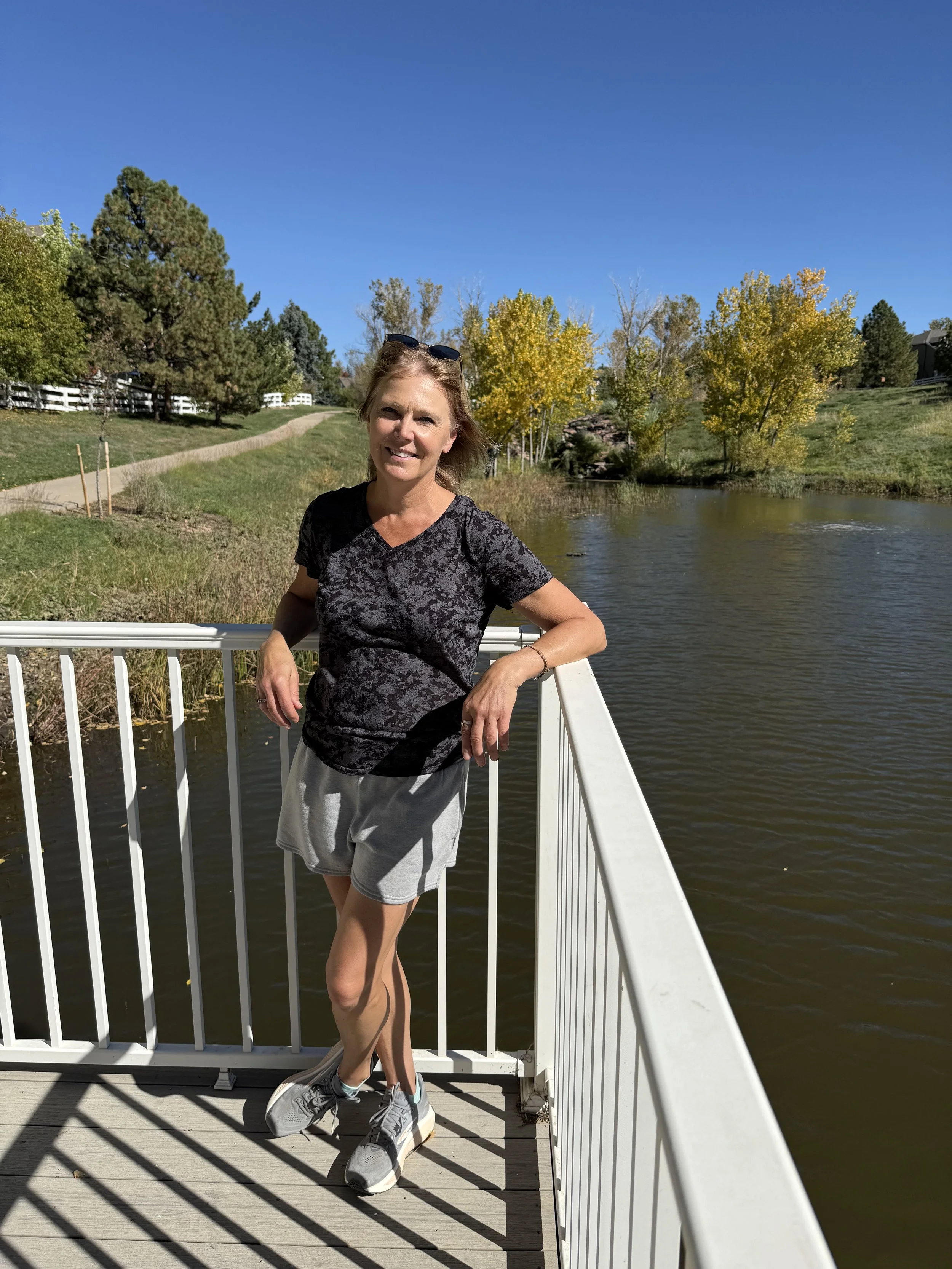
How it began
My symptoms started after college, when I took a job in retail management. I was working more than eighty hours a week. I was driven, I wanted to do well, and I didn't know how to slow down. Looking back, my nervous system was running on high alert nearly all the time, and I had no idea.
Severe back pain was my first disabling symptom. Then came a fatigue so deep I still struggle to describe it. It wasn't the kind of tired that a good night's sleep could fix. It was a heaviness that made ordinary tasks feel impossible.
Over the years, the list grew: fibromyalgia, head pain, chemical sensitivities, insomnia, and several other symptoms. Eventually, I left my career. My world got smaller and smaller until I was homebound for years. My life became about two things: trying to find a diagnosis, and then trying to heal from whatever symptoms I had at the time.
The endless search for a cause
If you live with chronic pain, you probably know this part of the story well. The appointments. The tests. The specialists. The supplements, the diets, the treatments that helped for a little while and then didn't. Every new symptom sent me looking for a new answer.
I was so relieved when I was finally diagnosed with chronic fatigue syndrome. At last, I had a name for what was happening. I believed I had a virus that would eventually go dormant, or that someday a cure would be found. I held onto that hope for a long time.
What I didn't realize then was that the search itself was keeping me stuck. Constantly scanning my body for what was wrong, bracing for the next flare, and fearing every sensation kept my brain in fight-or-flight. My brain was doing its job: trying to protect me. It just didn't know I was safe.
Finding the mind-body connection
Several years after my diagnosis, still searching, I began looking into the mind-body connection. I found an app called Curable. Within a couple of months, I knew I had TMS, tension myositis syndrome. My brain was causing my pain and discomfort, not my body.
That realization changed everything. My brain had learned pain. The nerve pathways that once signaled real danger had become well-worn grooves, firing even when there was no injury or disease to protect me from. This is called neuroplastic pain, and it is far more common than most people realize.
Here is the hopeful part: what the brain learns, it can unlearn. Because of neuroplasticity, we can teach the brain to interpret sensations as safe again. The pain is 100% real. It is simply coming from the brain's danger signal rather than damage in the body.
What helped me heal
Recovery didn't come from one magic technique. It came from slowly changing my relationship with my symptoms, my emotions, and my fear. These are the practices that made the biggest difference for me:
Pain Reprocessing Therapy (PRT). Learning to gather evidence that my symptoms were neuroplastic, and to respond to them with safety instead of alarm.
Somatic tracking. Turning toward sensations with curiosity and lightness, rather than bracing against them. This taught my brain, moment by moment, that I was okay.
JournalSpeak. Giving myself permission to write out the anger, grief, and pressure I had been carrying for years, without editing or judgment.
Emotional Awareness and Expression Therapy (EAET). Recognizing and expressing emotions I had learned to push down, especially the ones I thought I wasn't "allowed" to feel.
Self-compassion. Kristin Neff's work helped me soften the inner critic and the perfectionism that had driven me to work eighty-hour weeks in the first place.
Memory reconsolidation. Updating old emotional learnings so my nervous system no longer had to respond to the present as if it were the past.
The common thread was safety. As I felt safer in my body and with my emotions, my brain had less reason to sound the alarm.
What I see on the tennis court
I am also a tennis instructor and a high school tennis coach here in the Denver area. Being back on the court is one of the clearest signs of how far I've come, and it has given me a second window into this work.
I have seen firsthand how sports injuries can linger long after the body has healed. An athlete sprains an ankle or strains a shoulder; the tissue recovers, and yet the pain hangs on. They hesitate on a serve, guard a movement, or stop trusting their body. Fear of reinjury and pressure to perform can keep the brain's alarm system switched on.
The same principles apply here. When athletes learn that their brain may be protecting them more than it needs to, they can begin moving with confidence again and play their best.
How I work with clients
At Your Path Out Of Pain, I bring the same approach that helped me heal. I use compassion, validation, and mind-body practices to help clients see their pain through a different lens and feel safer, not only with their symptoms, but with the other stressors in their lives.
The question I always come back to is this: what, at the root, is perpetuating the pain? Sometimes it's fear of the symptoms themselves. Sometimes it's perfectionism, people-pleasing, unexpressed emotion, or years of pushing through. Usually, it's a combination.
I also use Motivational Interviewing in my sessions. That means I don't tell you what you should do. I listen, I ask questions, and I help you discover your own reasons and readiness for change. You are the expert on your life. My role is to walk beside you with tools, encouragement, and the perspective of someone who has been there.
Life now, and what's possible for you
This is not an easy journey, but it is a life-changing one. I was homebound for years. Today, I'm helping pain sufferers to recover as I did, coaching and teaching tennis, and doing all the things I love. My life is better now than it was before the pain.
I've also learned that this journey has no finish line. The tools that helped me recover, like self-compassion, emotional honesty, and listening to my body without fear, keep enriching my life long after the symptoms faded. It is so rich that you will want to keep going even after your symptoms are gone.
If I was able to recover from the multitude of symptoms I had, you can too. If my story sounds familiar, I'd love to talk with you about what's possible.
For pain recovery coaching, complete our contact form or schedule a free consultation.
Read 10 Steps to Retraining Your Brain Out of Pain for a step-by-step path to recovery.